Acorn
Their first words, three calm minutes a day.
Help your toddler learn first words in calm 3-minute sessions: tap-to-reveal picture cards with spoken audio you can slow down. No ads, no tracking.
Acorn
education
Their first words, three calm minutes a day
What you get
Acorn was built for exactly this.
The core features that make Acorn different from the generic alternatives.
Build a real first-words vocabulary, one tiny session at a time
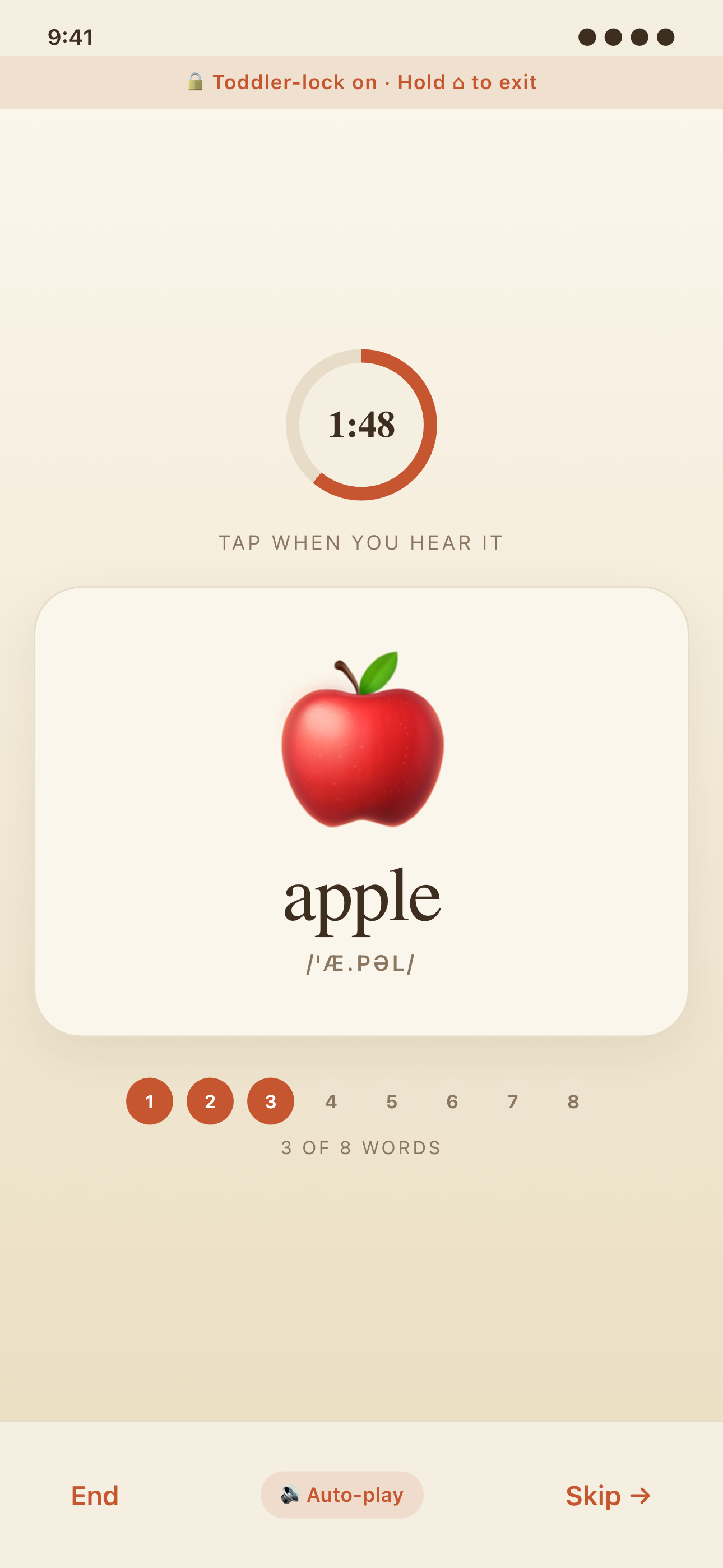
every card pairs a clear picture, the written word, and slow-able spoken audio (text-to-speech), so your 1–3 year old hears and says each word. Tap to mark the ones they got; Skip moves on.
Slow speech down so toddlers can copy it
adjust the spoken audio to 0.5×, 0.75×, 0.85×, or 1.0×, toggle auto-play voice, and show optional phonetic pronunciation — a genuine aid for early talkers and late talkers alike.
Stop the screen-time spiral before it starts
each session is a gentle ~3-minute ritual (set it 2–5 min) of 6–12 words that softly auto-stops. No autoplay, no rabbit hole — Acorn nudges you both to put the phone down.
Trust the app with your toddler
a child-safe toddler-lock keeps little fingers inside the session (hold-to-exit), while a 4-digit parent passcode — stored in the device keychain with a lockout and a Forgot-passcode reset — guards every settings and purchase screen.
Grow with real words your child knows
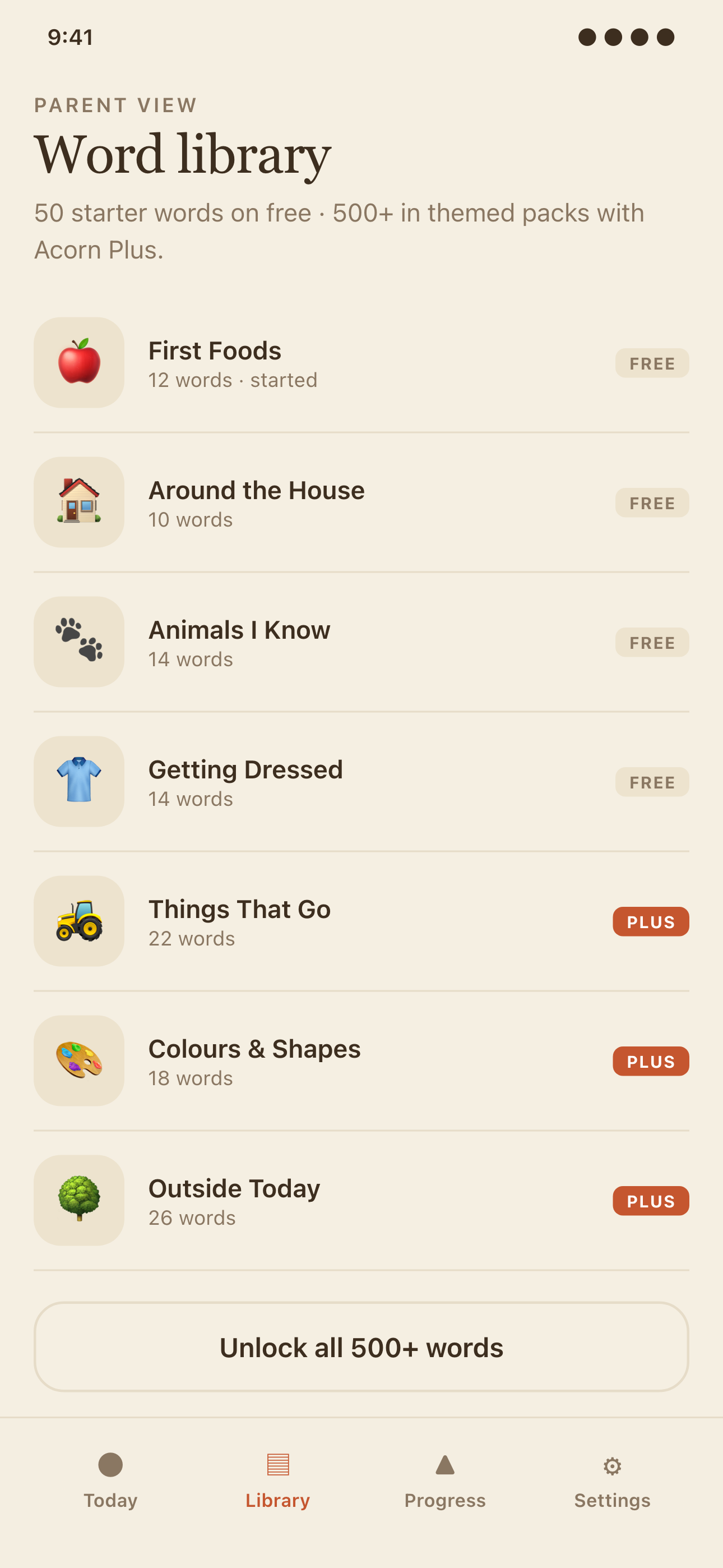
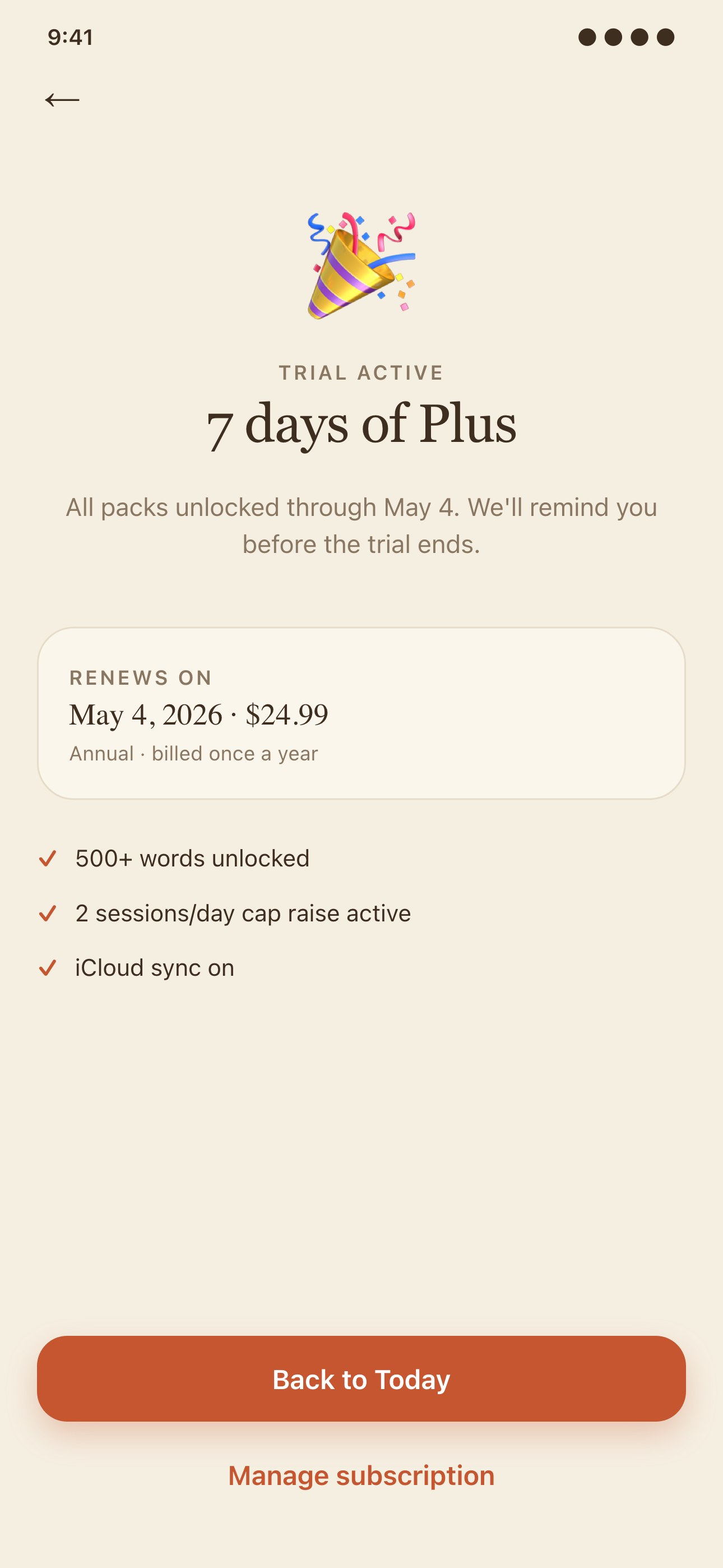
9 themed word packs (~144 words) starting with 4 free packs — First Foods, Around the House, Animals I Know, Getting Dressed — and 5 Acorn Plus packs covering Things That Go, Colours & Shapes, Outside Today, My Body, and Action Words.
See honest progress, not vanity streaks
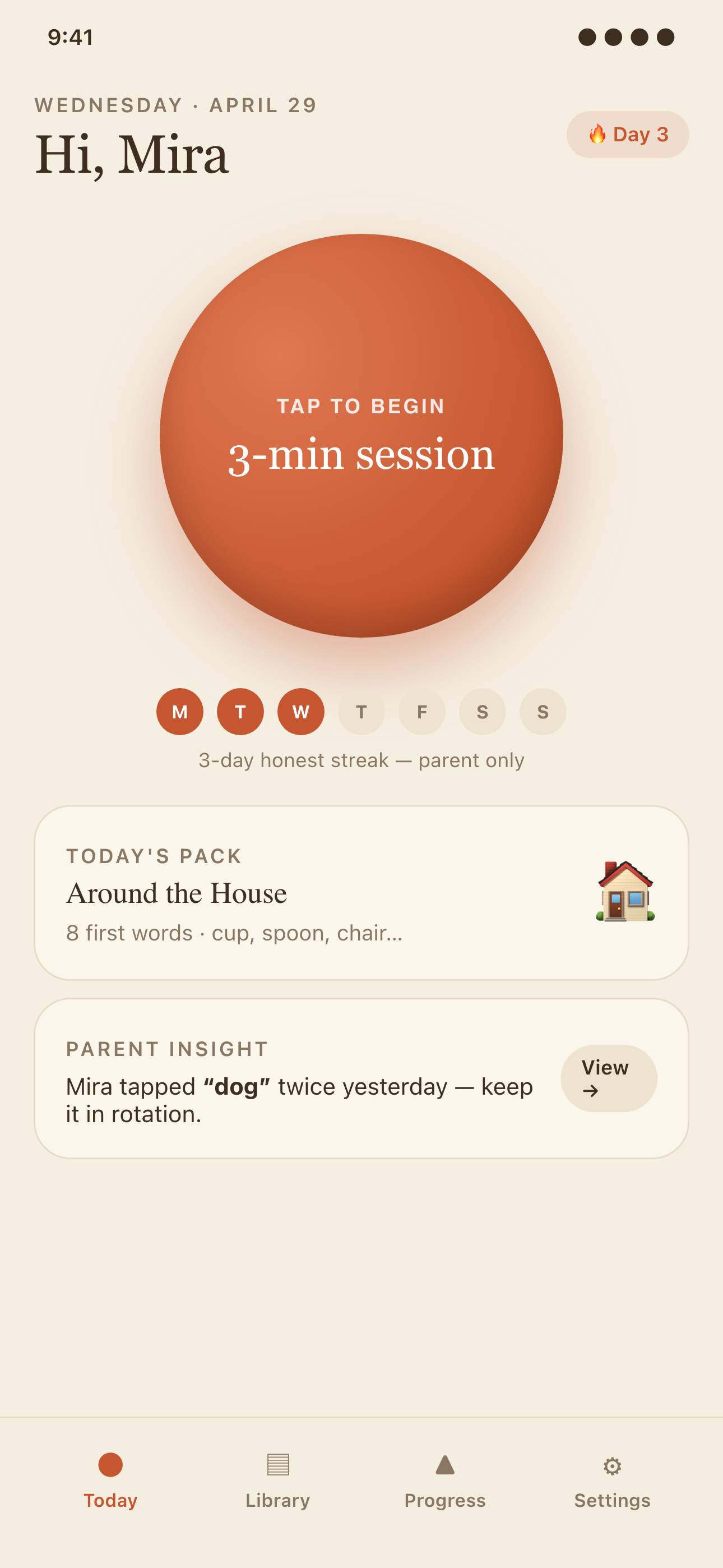
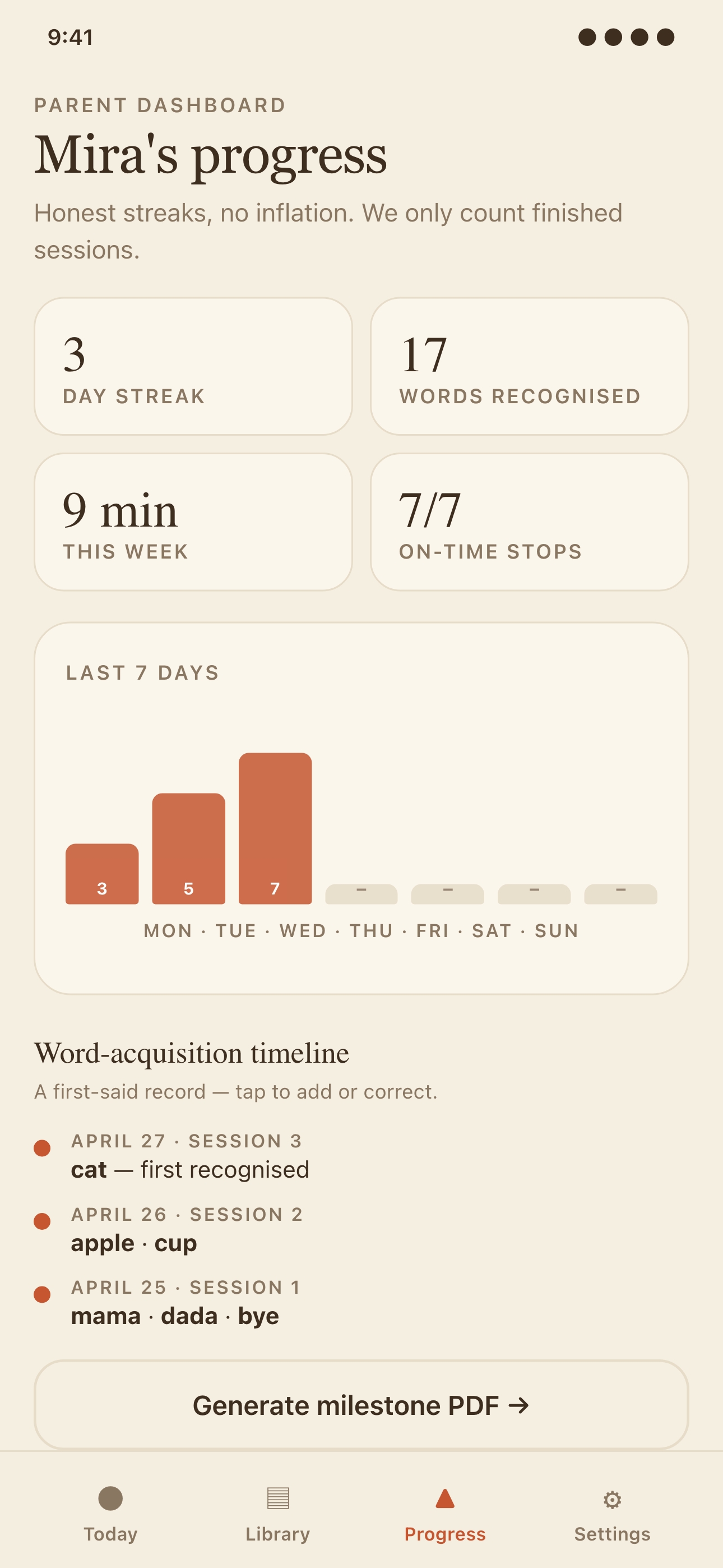
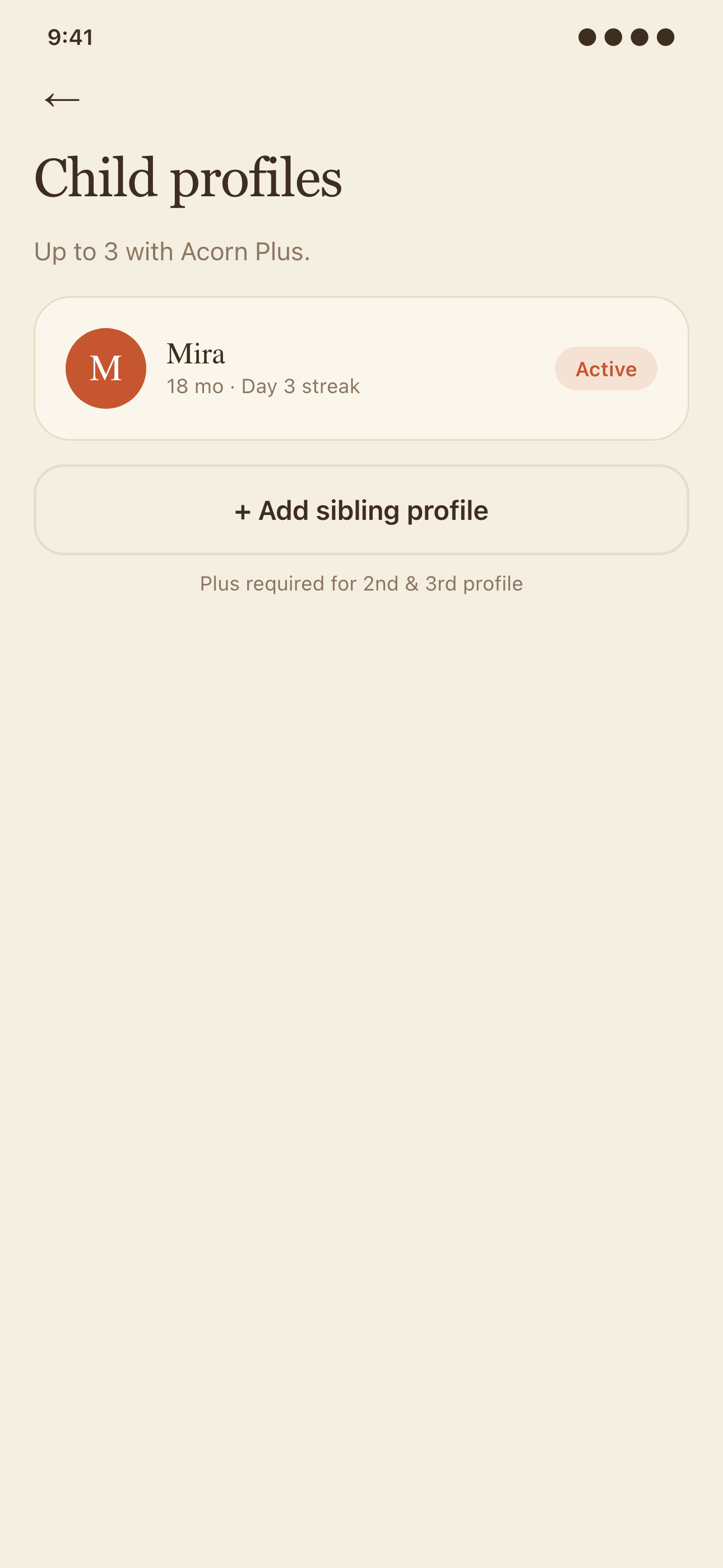
track each child's word events and session history with a streak that only counts sessions you finish. Add sibling profiles, and export a milestone PDF on Acorn Plus.
Private by design
everything lives on the device with no account required, no ads, and no microphone or camera access. Optional analytics and crash reporting stay off unless you turn them on, and an optional Sign in with Apple is parent-only.
Fits your routine
one optional daily reminder for the parent (a quiet local notification, no push servers), and Acorn Plus members can raise the limit to 2 sessions a day.
A look inside
See it in your hands.
A note from the studio
“I kept reaching for a toddler app and finding the same thing: ads, characters engineered to hold attention, and a paywall my kid could somehow tap through. I wanted the opposite — a few quiet minutes of real first words, nothing harvesting data in the background, and a clear stopping point. So we built Acorn to do one small thing well, and then to gently suggest you both put the phone down.”
How it works
Three steps. No account. No tracking.
01
A parent enters a 4-digit PIN at the parent gate to open settings or purchases; the session itself stays child-facing and toddler-locked.
02
The toddler taps each word card to see the picture, hear the word spoken aloud (speed adjustable), and say it back; tapping marks it recognised, and Skip advances.
03
After about three minutes the timer reaches zero and Acorn auto-stops to a 'session complete' card — no rewards loop, no nagging.
Not shipped yet
Notify me when Acorn ships.
It'll launch at $1.99/mo. Free tier: 4 free starter packs (50 words), 1 session/day, on-device, no account.
One email when it lands on the App Store. No drip sequence.
No spam. No tracking. Email only — unsubscribe with one click.
From the journal
Notes on the practice.
- 01
Why Does My Toddler Say 'Uh-Oh'? The Science of the First Word About a Mistake
Why does my toddler say uh-oh? Those two syllables are a real first word about change, loss, and mistakes, and how you answer in that moment teaches more than you'd think.
2026-10-26
6 min read
- 02
Why Does My Toddler Say No to Everything? The Science of Negation and First Words
Why does my toddler say no to everything? Negation is one of the first abstract ideas a child ever puts into a word. Here is what 'no' really means, and how to answer it.
2026-10-26
7 min read
- 03
Does My Toddler Need to See My Mouth to Learn Words? The Science of Lip-Reading and First Words
My toddler watches my mouth when I talk: is that normal? Yes, and it matters. The science of how babies read lips, and why face-to-face time builds first words.
2026-10-25
6 min read
- 04
Do Daily Routines Help Toddlers Talk? The Science of Bathtime, Mealtime, and the Scripts That Teach First Words
Daily routines and toddler language development are closely linked: the bath and breakfast you repeat every day give your child a predictable frame where first words can stick.
2026-10-25
7 min read
- 05
Does My Phone Use Hurt My Toddler's Language? The Science of Technoference and First Words
Worried about parent phone use and toddler language? Research shows a small interruption can stop a word from sticking. Here's what happens, and how to win it back.
2026-10-24
7 min read
The dispatch
A dispatch from the studio.
One short letter every few weeks. What we launched, what we cut, what we learned. No tracking pixels. Unsubscribe in one click.
We collect your email address only to send you this dispatch. We never sell it, and you can unsubscribe anytime. See our Privacy Policy.
Acorn is built privacy-first. Privacy Policy · Terms of Service